


What to Put in a Planner: 20 Ideas to Organize Your Life
You bought the planner. You chose your inserts. You opened to the first fresh page.
Now what do you actually put in your planner?
The answer is different for everyone.
A planner can be as simple as a calendar and weekly to-do list or become a complete system for organizing your schedule, goals, finances, routines, ideas, and everything in between.
If you are looking for planner ideas, start with the areas of your life you find yourself trying to keep track of mentally.
Here are 20 useful things to put in your planner.
1. Important Dates
Start with the dates you cannot move.
Think birthdays, anniversaries, appointments, travel, events, holidays, work deadlines, school dates, and anything else you want to see coming.
Add these to your monthly planner first so you can see the bigger picture.
2. Monthly Goals
At the beginning of each month, decide what you want to focus on.
Keep the list intentionally short.
Your monthly goals might include a financial goal, a fitness goal, something you want to complete at work, a personal project, or something you simply want to make more time for.
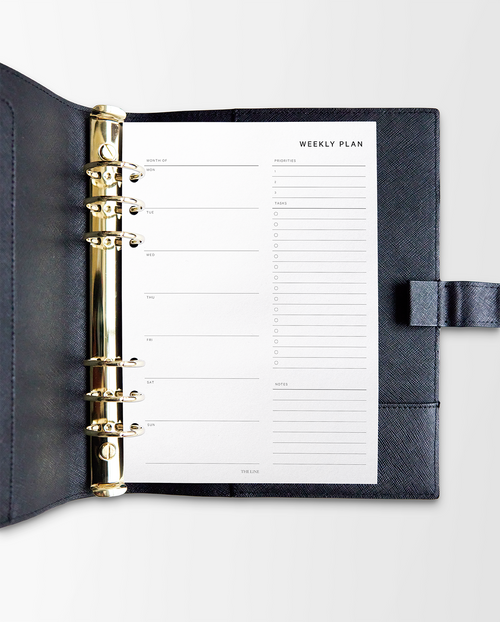
3. Weekly Priorities
Your weekly priorities connect your bigger goals with your everyday life.
At the beginning of the week, ask yourself:
What matters most this week?
Choose three to five priorities and keep them visible as you plan your days.
4. Daily To-Do Lists
Your planner is the perfect home for the things that need to get done today.
Try separating your essential tasks from the things you would simply like to accomplish.
A shorter, intentional list is often more useful than filling an entire page with tasks.
5. Appointments and Meetings
Doctor appointments, meetings, calls, coffee dates, beauty appointments, dinner reservations.
Keeping time-specific commitments in your planner allows you to see how much time is actually available around them.
6. Workouts
Planning your workouts in advance can make them feel like part of your schedule rather than something you need to find time for later.
Write down your runs, classes, gym sessions, walks, recovery days, or whatever movement looks like for you.
7. Meal Plans
Use your weekly planner to decide what you want to make for the week.
Meal planning can also make grocery shopping easier and remove one more decision from busy evenings.
8. Grocery Lists
Create a dedicated list you can add to throughout the week.
When you notice you are running low on something, write it down immediately instead of trying to remember it later.
9. Habit Tracking
Your planner can help you notice patterns in the routines you are trying to build.
You might track:
-
Movement
-
Reading
-
Water
-
Sleep
-
Meditation
-
Vitamins
-
Journaling
-
Spending
-
Morning or evening routines
Choose habits that are meaningful to you rather than tracking something simply because you can.
10. Financial Goals
A planner can be an incredibly useful tool for staying connected to your money.
Track savings goals, upcoming expenses, bills, no-spend days, financial milestones, or monthly money priorities.
If personal finance is an important part of your planning system, create a dedicated section so everything has a home.
11. Bill Due Dates
Add recurring bills to your monthly view.
Rent or mortgage payments, credit cards, utilities, subscriptions, insurance, and other recurring expenses are easier to manage when you can see what is coming.
12. Project Plans
Big projects become less overwhelming when you break them into smaller actions.
Create a page for the project, write down the desired outcome, then work backward.
What needs to happen first?
What can happen next?
Which steps have deadlines?
Then transfer those individual actions into your weekly planner.
13. A Brain Dump
Sometimes the most useful planner page has absolutely no structure.
Give yourself somewhere to write everything currently occupying your mind.
Tasks. Ideas. Reminders. Things to buy. People to call. Something you remembered at 11 p.m.
Get it onto paper first. Organize it later.
14. Wish Lists
Keep a running list of things you are considering buying rather than purchasing them immediately.
It can be a simple way to make more intentional spending decisions and remember what you actually wanted when birthdays or holidays arrive.
15. Books to Read
Create a reading list and add recommendations whenever you hear about them.
You can also keep a simple record of what you have finished throughout the year.
16. Travel Plans
Use your planner to organize upcoming trips.
Keep track of:
-
Flight details
-
Hotel information
-
Reservations
-
Packing lists
-
Places you want to visit
-
Restaurants
-
Trip budgets
-
Important booking dates
A dedicated travel section keeps the details together and easy to reference.
17. Content Planning
If you run a business or create content, your planner can become your editorial calendar.
Use it to plan:
-
Content ideas
-
Social posts
-
Campaigns
-
Photography
-
Emails
-
Launch dates
-
Partnerships
-
Deadlines
Seeing your content calendar on paper can make it easier to understand the cadence of what you are publishing.
18. Routines
Write out the routines you want to return to regularly.
That could be a Sunday reset, morning routine, evening routine, monthly financial reset, cleaning routine, or end-of-month review.
Instead of remembering every step each time, your planner becomes your reference.
19. Notes and Ideas
Not everything needs to be a task.
Create a section for ideas worth remembering.
Quotes. Recommendations. Things you want to research. Thoughts from a meeting. Something you want to revisit later.
A planner can hold more than your schedule.
20. Things You Want to Make Time For
This might be the most important list.
Dinner with friends.
A morning with nowhere to be.
Reading.
A long walk.
A trip you keep talking about.
A creative project.
Planning should not only be about making room for productivity.
Your planner can also remind you to make room for your life.
How to Organize Your Planner
Once you know what you want to track, organize your planner into a few clear sections.
For example:
Schedule
Monthly, weekly, and daily planning.
Goals
Annual and monthly goals, projects, and priorities.
Personal
Routines, workouts, meals, lists, and notes.
Finances
Budgeting, savings, bills, and financial goals.
Notes
Brain dumps, ideas, and anything you want to remember.
Planner dividers make it easier to create these categories while keeping your most-used pages easy to find.
But you do not need every section on day one.
Begin with the pages you know you will use. Add new sections only when you find yourself wishing you had somewhere to keep something.
Your Planner Should Reflect Your Life
There is no definitive list of what you should put in a planner.
That is the point.
Your planner should reflect what matters to you in this season of your life.
Maybe right now that means building a business. Training for something. Managing a busy family calendar. Saving for a goal. Starting a new job. Or simply trying to feel a little less scattered.
Build your planner around that.
The most useful planner is not the one filled with the most pages. It is the one filled with the things that help you live more intentionally.
Build a system that is entirely your own with The Line's customizable planner inserts, dividers, and agendas.